Article: Bow Tie Guide: How to Wear One and What to Pair It With
Bow Tie Guide: How to Wear One and What to Pair It With
A bow tie works with a tuxedo, a suit, a blazer or even a plain shirt and jacket, as long as the size fits your collar and the formality matches the event. For black tie, wear a black silk self-tie bow tie that matches your lapel facings. For everything else, choose a bow tie in a colour and cloth that suits your jacket, and keep the rest of the outfit simple.
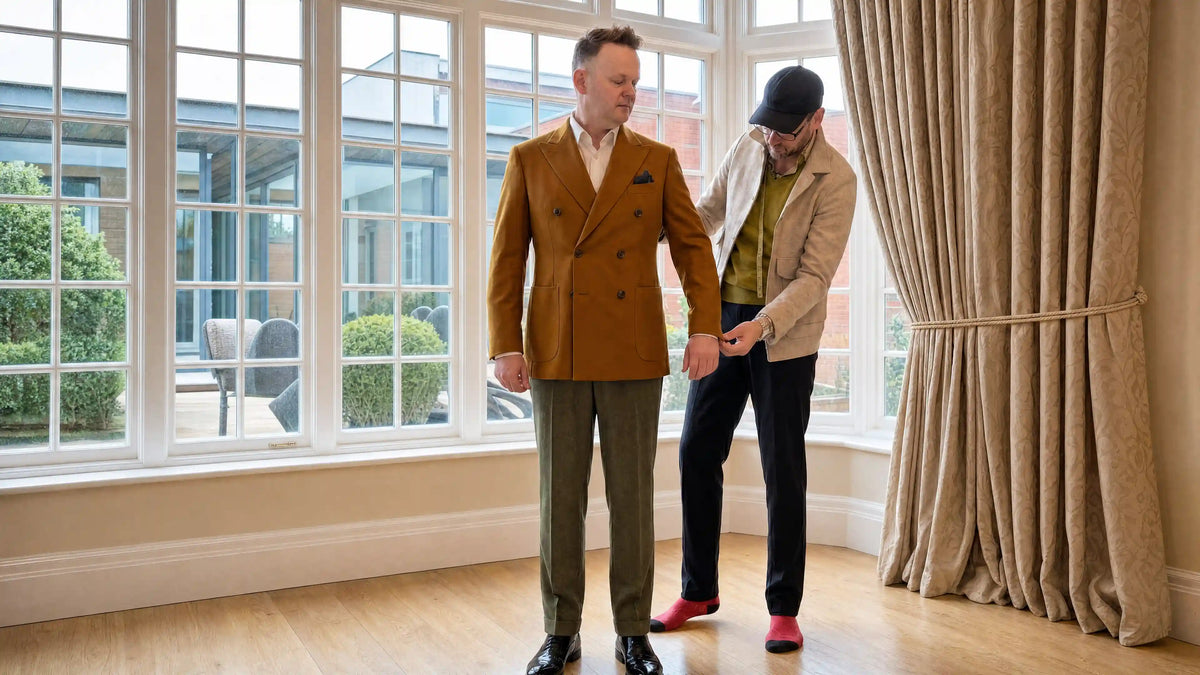
I'm Michael Frackowiak, a bespoke tailor with private studios in Liverpool and Riyadh. I dress grooms, guests and men who attend black tie dinners, and the bow tie is one of the most common questions I get at a fitting. Most men worry about two things: will it look costume-like, and will it look wrong? This guide answers both, with the same advice I give in the studio. It covers how to wear a bow tie with a tuxedo, a suit or a wing collar, as well as how to wear one casually.
What is a bow tie?
A bow tie, also called a dicky bow in the UK, is a strip of fabric tied into a symmetrical bow at the collar. It sits at the front of the neck and replaces the long necktie.
Its roots go back to the 17th century, when Croatian soldiers wore knotted neck scarves that European gentlemen copied and called cravats. Over time the long necktie took over for daily wear, while the bow tie stayed in formal evening dress. Today it is best known as the finishing piece of black tie, which is how the dress code got its name. If you enjoy the history, I cover how evening dress developed in my history of the tuxedo.
Types of bow tie: self-tie, pre-tied and clip-on
There are three types, and the choice affects how the outfit looks more than most men expect.

| Type | How it works | Best for | My view |
|---|---|---|---|
| Self-tie (freestyle) | One flat strip you tie yourself | Black tie, weddings, any formal evening | The correct choice. The slightly uneven knot looks natural and confident. |
| Pre-tied | A fixed bow sewn onto an adjustable neck strap | Beginners, busy mornings, casual events | Acceptable, but the perfect symmetry can give it away up close. |
| Clip-on | A fixed bow with a clip that attaches to the collar | Children, costume use | I would avoid it for adults. It slips and looks flat. |
If you only remember one rule: for black tie, tie it yourself. A pre-tied bow tie is fine for a relaxed party, but a self-tied one shows you took care. It also takes less effort to learn than most men think. I have included a video and the steps further down, along with a short section on how to wear a pre-tied or clip-on bow tie if that is what you have.
Bow tie shapes and sizes
The main shapes

- Butterfly: The classic. Wider in the middle and narrower at the knot. It suits most faces and almost every occasion.
- Batwing: Straighter and narrower, with a thinner profile. It looks sharper and slightly more modern.
- Diamond point: The ends come to a point. It is a more playful, less formal shape.
- Slim or skinny: A narrow bow that suits lighter, casual outfits and narrower collars.
- Oversized: A statement shape. It works on larger frames but can overpower a smaller face.
How to choose the right size
Proportion is what separates a bow tie that looks right from one that looks like a costume. Use these three checks:
- Width against your face. The bow should be about as wide as your face at the eyes, and never wider than your cheekbones.
- Width against your collar. The bow should not reach past the outer edge of the collar points. If it does, it is too big for that shirt.
- Width against your lapel. A wide lapel suits a larger bow. A narrow lapel suits a slimmer one.
Most self-tie bow ties adjust to fit a neck from about 14.5 to 20 inches. Check the adjustment range before you buy, and measure your neck at the collar line, not the base of the neck.
If you have a broad face or a thick neck, a butterfly shape in a medium to large size usually works best. A narrower face suits a batwing or a slimmer butterfly.
Bow tie fabrics and when to wear them
The cloth of your bow tie should match the formality of the event and the season.
| Fabric | Look | Best for |
|---|---|---|
| Silk (satin or grosgrain) | Smooth, with a subtle sheen | Black tie, weddings, evening events |
| Cotton piqué | Textured white cotton | White tie only |
| Wool or tweed | Soft, matte, textured | Autumn and winter, with blazers and sport coats |
| Knitted | Casual and textured | Smart casual, with a jumper or cardigan |
| Linen and cotton | Light and relaxed | Summer weddings, warm weather and hot climates |
| Velvet | Rich and soft | Winter parties, Christmas, evening events |
A simple rule I give clients: shiny cloth for evening, matte or textured cloth for daytime.
Bow tie colours and patterns
Start with the colour of your jacket, then decide how bold you want to go.

| Jacket or suit | Safe bow tie colours | Bolder options |
|---|---|---|
| Black tuxedo | Black silk | Burgundy or deep green at relaxed events |
| Midnight blue tuxedo | Black silk | Dark navy silk |
| Navy suit | Burgundy, dark green, grey, silver | Pale pink, yellow, patterned silk |
| Charcoal or grey suit | Navy, burgundy, silver, pale blue | Teal, mustard, small polka dot |
| Black suit | Black, deep red, silver | Richer jewel tones |
| Beige, stone or linen suit | Navy, brown, rust, olive | Soft coral, light blue |
| Tweed or herringbone jacket | Wool or knit in a deeper tone of the jacket | Contrast cloth such as mustard or rust |
A few extra rules:
- Solid colours are the safest. Add small patterns such as polka dots, fine stripes or paisley once you feel confident.
- Avoid a bold bow tie with a bold shirt. One strong piece is enough.
- Match the pocket square loosely, not exactly. Same colour family, different pattern or shade.
- Dark bow ties look more serious. Bright ones look more relaxed. Choose by event, not only by taste.
What to wear with a bow tie
This is the question most people actually search for, so here is the full answer, piece by piece.
The shirt and collar
The collar frames the bow tie, so it matters more than any other part of the shirt.

- Turndown (classic) collar: The standard choice for black tie in my studio. It is comfortable and works with every bow tie shape.
- Wing collar: Stiff, upright points. It is the traditional collar of white tie, and many men now wear it with a tuxedo for a formal look. I explain how to wear it below.
- Spread or semi-spread collar: A good choice for suits. The wider opening gives the bow tie room.
- Button-down collar: Works well for smart casual outfits with a blazer or sport coat.
- Mid-cutaway collar: Frames the bow without too much collar point below it. Extreme cutaway and very long points can look unbalanced.
For colour, white and light blue are the safest. A fine stripe or a subtle check works if the bow tie is a solid colour. Tuck the shirt in when you wear a jacket. An untucked shirt with a bow tie is the most casual way to wear one.
With a turndown, spread or button-down collar, the bow tie sits under the collar, with the collar points folded down over it. A wing collar works differently, as the next section explains.
How to wear a bow tie with a wing collar
A wing collar is the traditional partner of the bow tie, and it works differently from every other collar in this guide. The collar stands upright around the neck, with two small folded points at the front called wings. Unlike a turndown collar, the wings do not fold down over the bow tie. The bow tie sits in front of the collar band, in the gap between the wings, so the wings frame the knot on either side.
- Put the collar on first. A wing collar is stiff, so fasten it properly before you tie the bow tie.
- Tie the bow tie at the collar band, not below it. If it drops too low, you will see a gap of shirt front above it.
- Keep the bow tie neat. A medium butterfly or a batwing fits between the wings. An oversized bow will push against them and look crowded.
- Choose the cloth by the dress code. Black silk for black tie, and white cotton piqué for white tie.
A wing collar with a tuxedo is a formal, slightly traditional look, and many of my clients choose it for a wedding or a gala because it stands out. I would not wear it with a business suit, because the collar is too formal for that setting.
Bow tie with a tuxedo shirt or a dress shirt
People often ask whether any white shirt will do. For a suit, a plain dress shirt works perfectly. For a tux, the shirt makes a real difference.
- Tuxedo shirt: Has a pleated or marcella (textured piqué) front, a fly front that hides the buttons, and double cuffs for cufflinks. Many tuxedo shirts fasten with studs instead of buttons.
- Dress shirt: A plain front with visible buttons. It is the right choice with a business suit, a blazer or a sport coat.
With either shirt, fasten the top button before you tie the bow tie, and make sure the collar fits your neck. If the collar is too tight, the bow tie will bunch, and if it is too loose, the bow will sag. A plain dress shirt with a tuxedo is acceptable in an emergency, but a proper tuxedo shirt looks cleaner under the jacket.
The jacket
A bow tie almost always looks best with a jacket. Here is how I match them:
- Tuxedo or dinner jacket: Peak or shawl lapels, faced in satin or grosgrain. The bow tie should match those facings.
- Business suit: Notch lapels, solid or subtly patterned cloth. Choose a quieter colour for work.
- Blazer: Classically navy with metal buttons. A bow tie in a solid or small pattern works well. I explain the difference in my guide to blazers and sport coats.
- Sport coat, tweed or herringbone: A wool, knitted or textured bow tie suits these perfectly.
- Linen jacket: A cotton or linen bow tie in a relaxed colour.
Jackets with a closer, higher-buttoning front show less shirt, which makes a bow tie look more balanced. A three-piece suit is an excellent frame for a bow tie.
The waist: waistcoat, cummerbund or braces
With a tuxedo, cover the waist with either a cummerbund or a waistcoat, never both. If you wear a cummerbund, the pleats face up, it sits at your natural waist and you wear no belt. Braces are fine and sit hidden under the jacket. I explain every detail in my guide to the dinner suit with cummerbund.
With a business suit, a matching waistcoat gives the cleanest look and shows off the bow tie.
Trousers
Black tie trousers have a silk braid down the outer leg that matches the lapel facings and no belt loops. For a suit, wear matching trousers, with or without a belt. For smart casual, chinos or wool trousers in grey, navy or tan work well.
Shoes and socks
- Black tie: Black patent oxfords or highly polished black calf, with fine black over-the-calf socks.
- Suit: Black or dark brown oxfords or derbies.
- Smart casual: Brown brogues or loafers.
Accessories
- Pocket square: Optional. With a bow tie, it is fine to leave it out. If you wear one, choose white linen for black tie, and a lightly patterned silk for suits.
- Cufflinks and studs: For a double-cuffed shirt, a simple pair of cufflinks. For black tie, shirt studs and cufflinks in a matching set.
- Lapel pin or flower: One small detail is enough.
- Watch: A slim leather-strap watch keeps the look elegant.
- Beard and glasses: Both work with a bow tie. Keep a beard neat, and choose frames that suit the face.
How to wear a bow tie with a tuxedo (black tie)

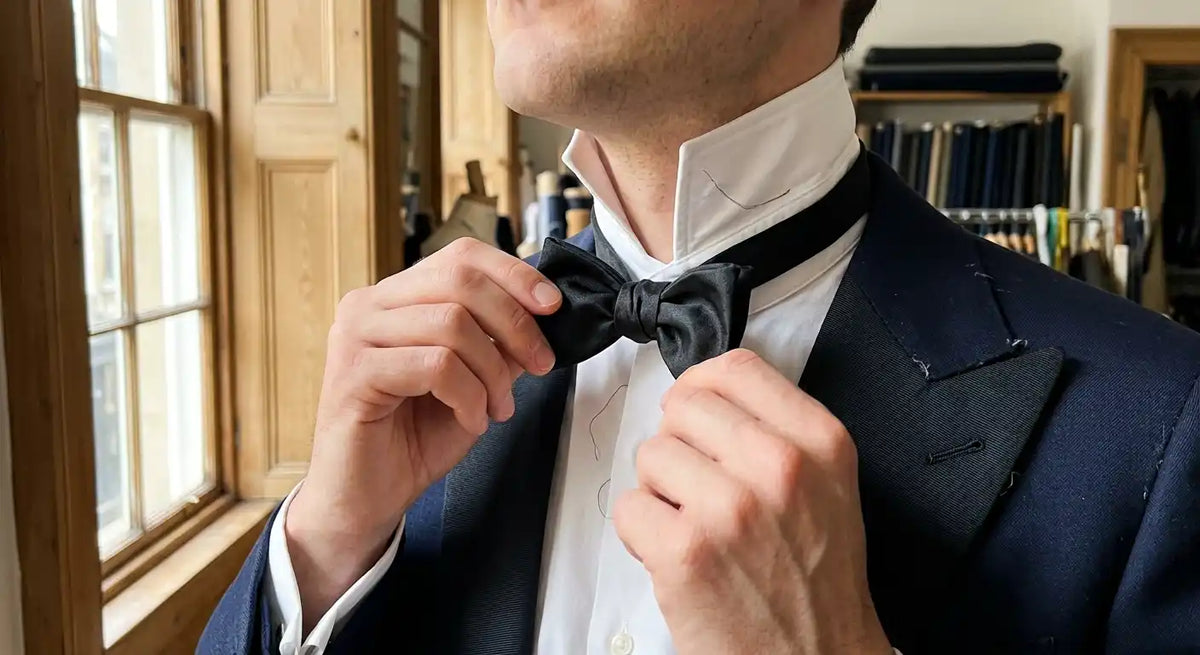
For black tie, the rules are clear. Wear a black silk self-tie bow tie in the butterfly shape, matched to the satin or grosgrain on your lapels. Choose a white tuxedo shirt, a turndown or wing collar, a cummerbund or waistcoat, and polished black shoes.
The simple test I give clients: your lapels, buttons, trouser braid and bow tie should all be the same silk. When they match, the outfit looks deliberate. When they do not, it looks assembled. I explain the full dress code in my guide to tuxedo vs suit.
For white tie, which is more formal, the bow tie is white cotton piqué and is worn with a tailcoat and white waistcoat.
Can you wear a bow tie with a suit?

Yes. A bow tie with a suit reads as slightly less formal than a necktie, but it looks sharp and intentional when the proportions are right.
For work, choose a calm colour such as navy, burgundy, grey or dark green, in silk or a fine wool. Pair it with a white or light blue shirt and a navy, grey or charcoal suit. A bold bow tie can work in creative or relaxed offices, but a quiet one is easier to wear every day.
For a wedding, a bow tie is a good way to stand out. If you are the groom in a lounge suit, a bow tie with a three-piece suit helps you look like the groom, not a guest. I explain the full approach in my groom's guide to wearing a lounge suit.
How to wear a bow tie casually

A bow tie does not need a suit. Here are the casual options that work:
- With a blazer or sport coat, a shirt and chinos. This is the easiest casual bow tie outfit.
- With a jumper or cardigan over a collared shirt. Wear the bow tie under the collar and keep the colour simple.
- With a shirt and no jacket. The most casual version. Roll the sleeves and keep the bow tie in a relaxed fabric such as cotton or linen.
- With jeans. Works if the jacket and shirt are smart and the bow tie is textured.
A bow tie with a t-shirt or an open collar is a fashion statement, not classic tailoring, and I would not recommend it for most men.
Bow tie for different occasions

| Occasion | What I recommend |
|---|---|
| Black tie event or gala | Black silk self-tie with a tuxedo |
| Evening wedding | Black silk with a tuxedo, or a coloured silk bow tie with a suit |
| Daytime wedding | Self-tie in silk or wool, in a colour from the wedding palette |
| Groomsmen | A matching colour and fabric across the group |
| Father of the bride | Classic silk in black, navy or grey |
| Office or interview | Dark, simple and neat, if the workplace allows it |
| Business events and conferences | A suit with a quiet silk bow tie |
| Prom or graduation | A tuxedo with a black or colourful silk bow tie |
| Christmas and winter parties | Velvet or wool in burgundy, green or navy |
| Funeral | Wear a plain dark necktie instead |
Bow tie vs tie
| Bow tie | Necktie | |
|---|---|---|
| Formality | Formal for evening, relaxed for day | Standard for business |
| Practicality | Stays out of soup and wind | Can hang or flap |
| Statement | Distinctive | Familiar |
| Learning curve | A little practice | Easy |
| Best with | Tuxedos, three-piece suits, blazers | Almost any business outfit |
A necktie is the safer, quieter choice. A bow tie says you pay attention to detail. For black tie, the bow tie is not optional. A long tie with a tuxedo is a common mistake.
How to tie a bow tie
Watch the short video first, then use the written steps below as a quick reference while you practise.
- Drape it around your neck under the collar, with one end about 4 cm (1.5 inches) longer than the other. The longer end should be on your right.
- Cross the long end over the short end, then bring it up behind the knot and through the loop at your neck. Pull it snug.
- Fold the short end into a bow shape across the front. This forms the front of the bow.
- Drop the long end over the front of the bow, covering the middle.
- Fold the long end and push it through the loop behind the front bow.
- Pull both ends gently to tighten, then adjust the shape until both sides look balanced.
Practise two or three times before the event. A slightly uneven bow is normal and looks natural. To untie it, simply pull both ends.
How to wear a pre-tied or clip-on bow tie
I recommend a self-tie for adults, but I know a pre-tied bow tie is useful for a first wedding, a busy morning or a child's outfit. If you wear one, a few details make it look much better.
Pre-tied (adjustable strap)
- Set the strap length first. Adjust it so the bow sits snug at your collar line without pinching.
- Fasten the hook at the back of your neck, under the collar.
- Centre the bow on your shirt buttons and turn the collar down over the strap, so only the bow shows.
- Shape the bow with your fingers. A slight softness makes it look hand-tied, not fixed.
Clip-on
A clip-on attaches straight to the collar or the shirt front. Clip it at the centre, check it sits level in a mirror, and make sure the clip is hidden under the collar. Test it before the event, because a cheap clip can slip. This is also why I prefer a pre-tied or self-tie bow tie for adults.
Common bow tie mistakes
- A bow tie that is too big or too small for your face or collar.
- A long tie with a tuxedo. Black tie means a bow tie.
- A cummerbund and waistcoat together. Choose one.
- A shiny pre-tied bow tie with a tuxedo, where it looks flat.
- A bold pattern on a bold shirt. Let one piece lead.
- Wearing it without a jacket at a formal event.
- A bow tie that does not match the lapel facings on a tuxedo.
- Forgetting the shirt collar. The right collar does half the work.
How to care for a bow tie
Steam or lightly press the bow tie on a low heat, with a cloth between the iron and the silk. Untie it after each wear and hang it or lay it flat. Do not leave it knotted in a drawer, because it will hold the crease. Store silk bow ties away from direct sunlight to protect the colour.
Famous bow tie wearers
Winston Churchill made the polka dot bow tie a signature. Fred Astaire and Frank Sinatra wore the black bow tie with effortless style. James Bond made the black dinner suit and bow tie the image of confidence, and Matt Smith's Doctor Who made the bow tie fun again. The lesson is the same in every case: the bow tie only works when the jacket fits well.
Why the fit of your jacket matters more than the bow tie
I will be honest with you. A beautiful bow tie cannot rescue a poorly fitted jacket. The bow tie sits right at the centre of your chest and face, so the collar, lapel and shoulder line around it are all visible. If the collar gaps or the lapel bulges, the bow tie draws attention to it.
That is why I draft my dinner suits and suits from a hand-cut pattern made for each client. The lapel facings, the buttoning point and the trouser rise are planned together, so the bow tie, cummerbund and jacket sit as one clean line. When I make a dinner suit, I also help clients choose a bow tie that matches their lapel facings, because it is the detail that makes the whole outfit look finished.
If you would like advice on cloth, lapel style or a full outfit for a wedding or black tie event, you are welcome to get in touch with me.
Bow tie FAQ
Can you wear a bow tie with a suit?
Yes. A bow tie works with any well-fitted suit. For work, choose a quiet colour. For weddings and parties, you can go bolder.
What shirt collar is best for a bow tie?
A turndown collar for black tie and a spread or semi-spread collar for suits. A wing collar is the formal choice for white tie. Avoid extreme cutaway collars or very long points.
How do you wear a bow tie with a wing collar?
Tie the bow tie at the collar band, between the wings, and keep the bow neat so it does not push against them. Use black silk for black tie and white piqué for white tie.
How do you wear a clip-on or pre-tied bow tie?
Adjust the strap to fit snugly, centre the bow on your shirt buttons, and hide the strap or clip under the collar. Shape the bow lightly with your fingers so it looks natural.
Should a bow tie match the cummerbund?
Yes, in both colour and fabric. Ideally both also match the silk on your lapel facings.
Is a self-tie or pre-tied bow tie better?
Self-tie, especially for formal events. It looks more natural and shows care. A pre-tied bow tie is acceptable for casual use.
Can you wear a bow tie to work?
Yes, in most modern offices. Choose a dark, simple bow tie and pair it with a well-fitted suit or blazer. In very traditional workplaces, a necktie is safer.
Can you wear a black bow tie to a wedding?
Yes. A black bow tie suits a black tie wedding and looks smart with a dark suit at an evening wedding. For a daytime wedding, a coloured or textured bow tie may feel more relaxed.
Do bow ties go over or under the collar?
With a turndown collar, the bow tie sits under the collar, and the collar points fold down over it. With a wing collar, the bow tie sits in front of the collar band, between the wings.
What colour bow tie goes with a navy suit?
Burgundy, dark green, grey and silver are the safest choices. Pale pink, yellow or a subtle pattern work if you want something bolder.
How wide should a bow tie be?
About as wide as your face at the eyes, and not wider than your cheekbones. It should not extend past the outer edge of your collar points.
Can you wear a bow tie without a jacket?
Yes, in a casual setting, with a collared shirt tucked in or left out. For formal events, always wear a jacket.
Should you wear a bow tie to a funeral?
No. A plain dark necktie is the traditional choice.
What is the difference between a bow tie and a dicky bow?
Nothing. "Dicky bow" is the British name for a bow tie.
Does a bow tie work with a beard?
Yes. Keep the beard neat and choose a bow tie size that suits the width of your face.
Does a bow tie need to match the pocket square?
No. They should complement each other, not match exactly.
The simple rule to remember
Choose a self-tie bow tie that fits your face and collar, match it to the formality of the event, and let the jacket fit do the rest. For black tie, the answer never changes: black silk, matched to the lapels. For everything else, keep one element bold and the rest calm.